

Details:
Contents: 1/10 pieces
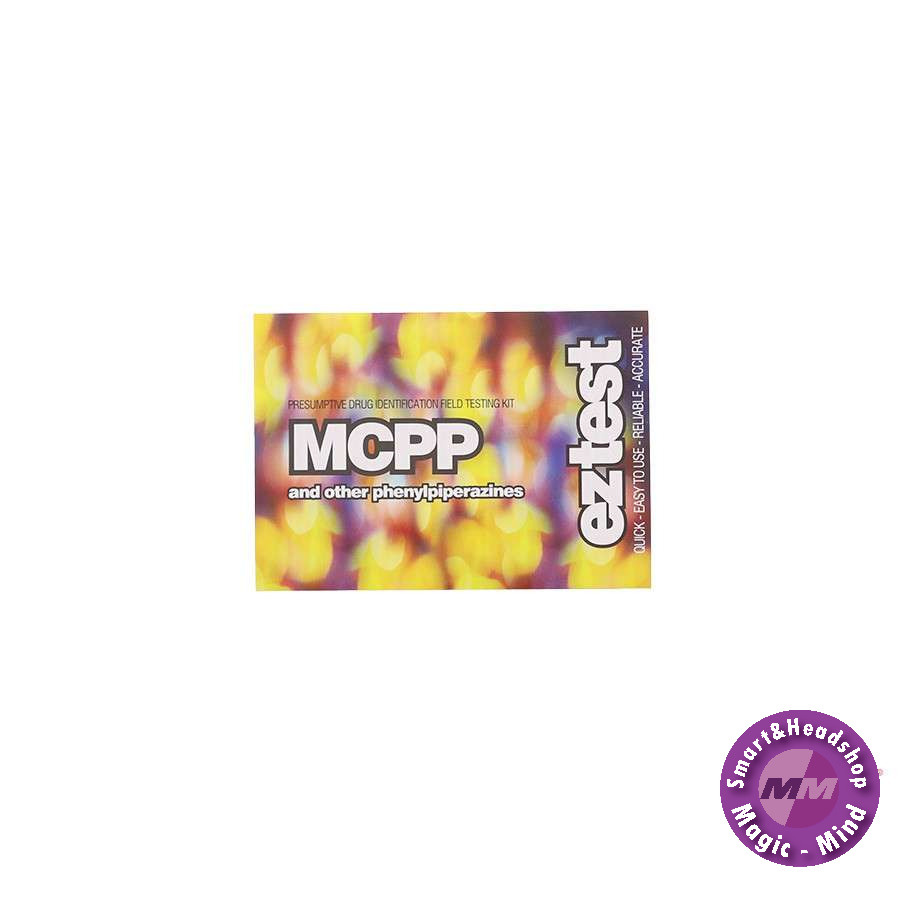
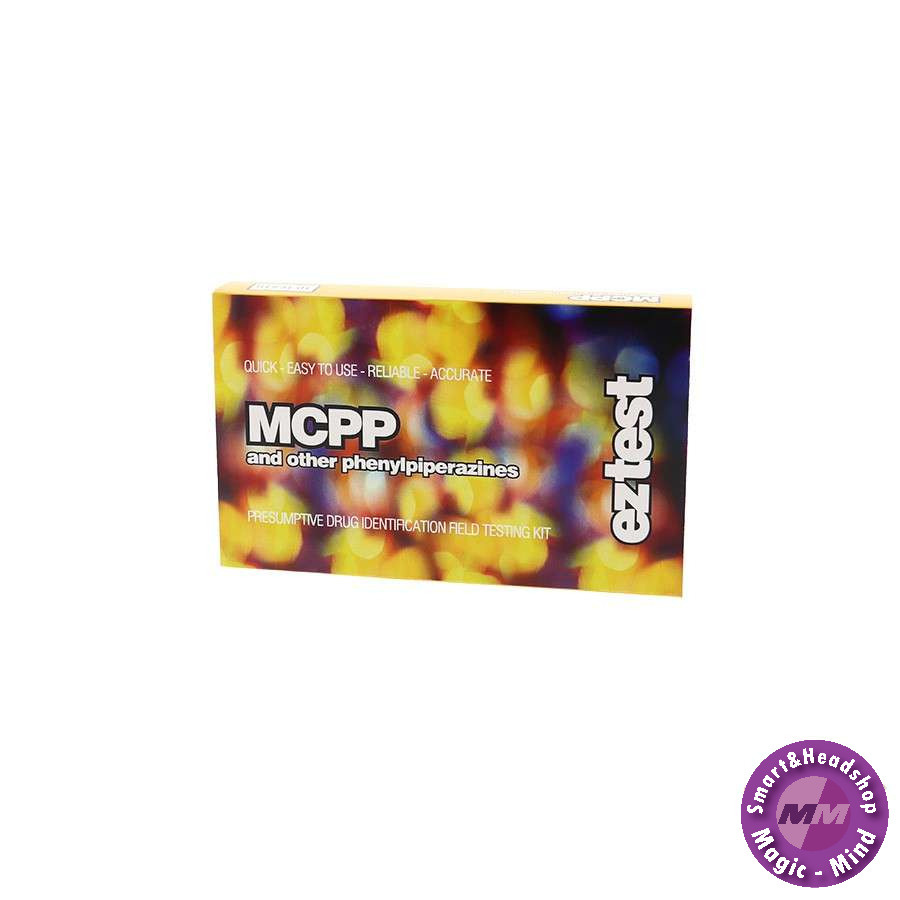
Finally, there is a reagent that can detect phenylpiperazines such as mCPP and TfMPP: EZ Test mCPP.
A worldwide shortage of the main precursor used for the production of MDMA, PMK, or MDP2P led unscrupulous producers to look for other substances that could be sold.
They flooded the market with pills made with this stuff. MCPP and other piperazines have nothing to do with ecstasy, nor do these substances have the effects that make ecstasy so special.
As a bonus, this test kit also reacts to 6-APB, which turns burgundy. Although the samples used for this could not be verified by the laboratory due to the lack of a standard reference sample, they came from a very reputable source. That is why we have included it in the results, but as 'unverified'...
Please note: sometimes we receive the 'complaint' that the test does not work. NOT CORRECT! Below you will see an image that tells you which color to look for (please note, this is not indicative of the presence of MDMA; it only tells you the difference in colors). mCPP and other piperazines turn bright yellow, while other substances may show a more orange-like color.
Usage:
The MCPP test is a new addition to the EZ test range and was specifically introduced to identify more recent 'herbal highs' or 'research chemicals' containing piperazines (also known as PEPs) and MCPP.
The MCPP test will change color for meta-ChloroPhenylPiperazine (MCPP) and Phenylpiperazines (i.e., TMfPP). The enclosed information sheet and color chart should correspond to these substances.
In Europe, piperazines are often sold as ecstasy. Piperazines do not react with the EZ Test Marquis test. There is also a color reagent for 6-APB (BENZO FURY) with the label "Unverified sample" underneath in the color chart – the sample used for testing was not verified by the laboratory as 100%. Further analysis is being conducted.
All EZ tests use a chemical reagent absorbed in silica gel, which is contained in a glass ampoule.
When a sample is added to these chemicals in the ampoule, a color change will occur upon reaction. This color must be compared with the color chart included in the instructions on the packaging to provide an indication of what might be in the sample.
If your unopened ampoule is damaged, please contact the store where it was purchased.
Instructions:
There are 4 quick and easy steps to follow:
(1) Break open the ampoule.
(2) Insert a small amount of the sample.
(3) Put the plastic lid on and shake well.
(4) Compare the color change with the chart.
Warning:
Remember to dispose of the ampoule and the sample safely after testing.
The EZ test kits are purely a guide to help analyze a substance. It is recommended not to touch any substance, and extensive laboratory testing of samples is recommended for more detailed results.